Ph.D. Student @ UW-Madison · Working on |
I am a third-year CS Ph.D. student at the University of Wisconsin–Madison. Previously, I was an AI Research Resident supervised by Prof. Minh Hoai, Prof. Cuong Pham, and Dr. Tuan Anh Tran at Qualcomm AI Research (formerly VinAI Research). In Summer 2025, I interned at Sony R&D Lab, working on gallery-based image restoration. Since May 2026, I have been an Applied Scientist Intern at Amazon, working on world modeling and video generation.
I received my B.Sc. in Computer Science from Ho Chi Minh City University of Science (HCMUS) under the supervision of Dr. Ngoc-Thao Nguyen and Prof. Minh-Triet Tran.
My research interests lie in Generative Models, particularly Video diffusion models, 3D/4D Generative frameworks, and Image Restoration.
News
Experience



Highlighted Research
AI video generators often forget the scene: objects vanish once the camera looks away, backgrounds dissolve, and shapes drift from frame to frame. Videoctor corrects these geometric persistence failures after generation, repairing the video from the moment it goes wrong while keeping the frames that were already correct. We also introduce a benchmark of paired videos with controlled persistence failures to evaluate such corrections.
A Gaussian Splatting framework for multiview 3D reconstruction from single-photon cameras that renders transient histograms without costly ray-based sampling. It works across diverse single-photon imaging systems, from low-resolution wide-FoV SPAD cameras to high-resolution SPAD LiDAR, running at least 36× faster with over 2.7× lower reconstruction error than prior methods, and further supports incremental reconstruction and camera self-calibration.
Introduces a novel unpaired reference-based deblurring framework for camera-specific image restoration, eliminating the need for controlled data collection or paired supervision. The method leverages an iterative dense-matching training strategy to construct high-quality pseudo ground truth, enabling robust generalization across diverse real-world blur scenarios.
Introduces a novel framework to train camera-specific image deblurring algorithms by transforming challenging real blurry images into known blur kernels using only unpaired data, simplifying the deblurring process and demonstrating superior performance on benchmarks.
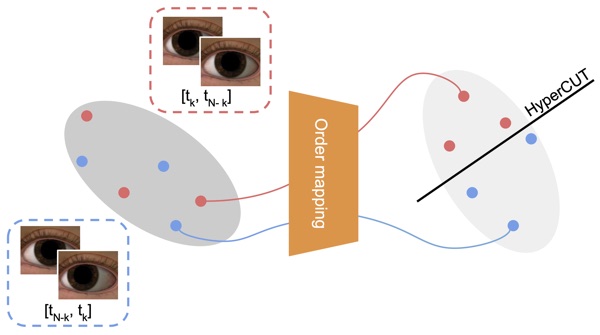
Tackles image-to-video deblurring, resolving sequence order ambiguity using a self-supervised method. Also introduces a diverse real blur-to-video image dataset (RB2V) covering domains like faces, hands, and streets.
Awards and Honors
- CS Departmental Scholarship, University of Wisconsin–Madison.
- 1st Prize in SHREC’22 Track: Open-Set 3D Object Retrieval – 2022.
- Distinctive Mention in MediaEval 2021 Workshop Program – 2021.
- 1st Prize in Visual Sentiment Analysis of MediaEval 2021.
- 1st Prize in 3D Shape Retrieval Challenge (SHREC’21) – 2021.
- 1st Prize in Sports Video Classification of MediaEval 2020.
- Excellent Young Research Award at VANJ 2020 Conference – 2020.
- Top 10 at AI4VN – 2020.
- Top 3 at Emotion Recognition Competition – 2019.
- Top 5 at Zalo AI Hackathon – 2019.
- 2nd Prize in Informatics Olympic Contest for Students – 2019.
- 2nd Prize in National Master of Ceremonies Contest – 2019.
- 3rd Prize in Informatics Olympic Contest for Students – 2018.
Reviewer Activities
- Conferences: CVPR, ICCV, ECCV, NeurIPS, ACM MM, WACV (2024–2025)
- Journals: IEEE TPAMI, IJCV, CVIU, Pattern Recognition, Neural Networks (2024–2025)